
Thermal Systems
Plate Heat Exchanger
Compact plate heat exchangers with high heat transfer per square metre, in gasketed, brazed and welded versions.
Specifications
- Typical design pressure
- gasketed up to 25 bar, welded and brazed higher
- Typical design temperature
- gasketed up to about 150–180 °C, depending on gasket
- Plate thickness
- commonly 0.4–0.8 mm
- Temperature approach
- as close as 1–2 °C in counterflow
Plate area, number of plates and connection sizes configured to your duty
Description
Plate Heat Exchangers: Gasketed, Brazed & Welded
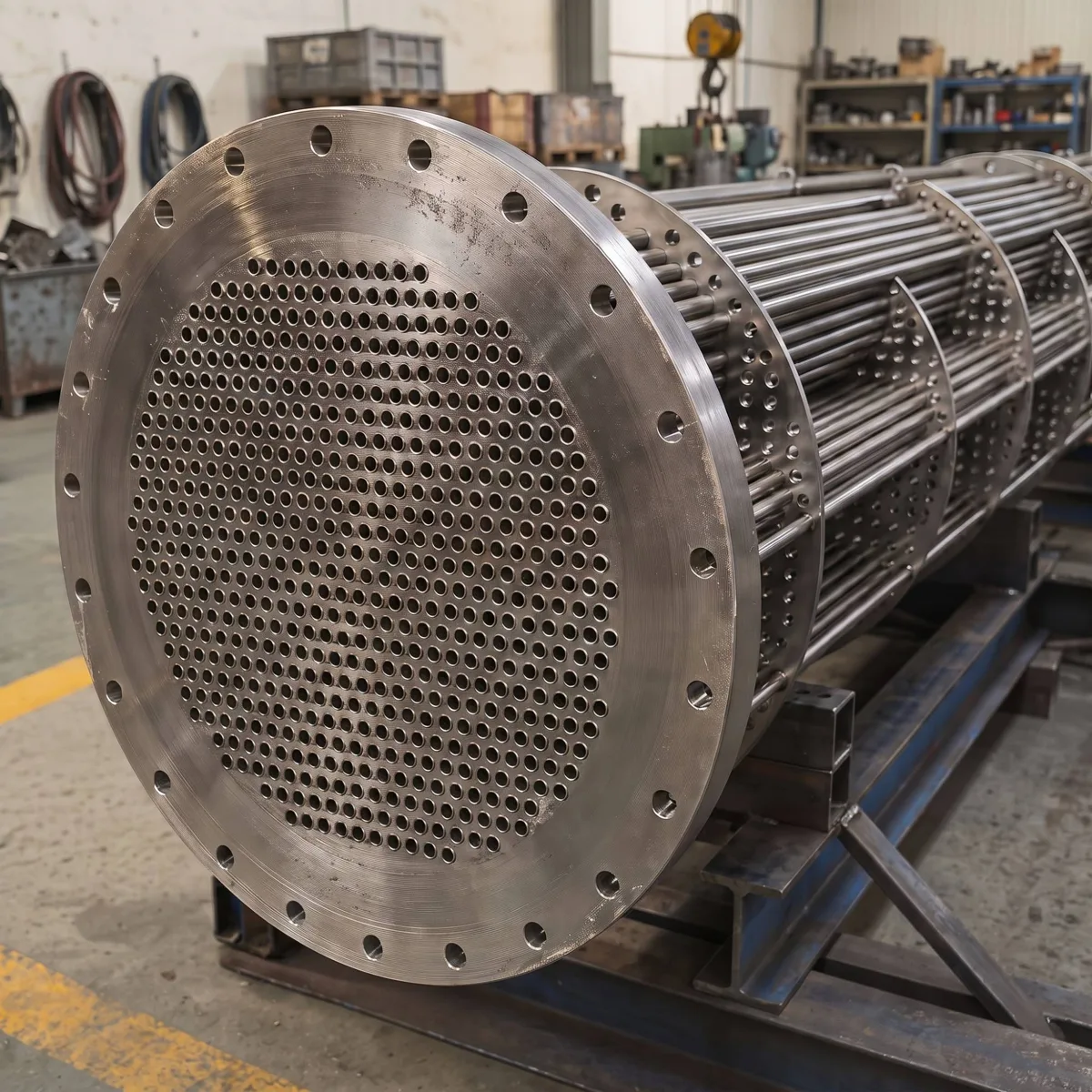
Corrugated plates give a plate heat exchanger several times the heat transfer of a shell and tube unit of the same size. The result is a compact, efficient exchanger with a close temperature approach, and in the gasketed version one that can be opened up and extended as your duty changes.
Plate Types
- Gasketed: plates sealed by gaskets in a bolted frame. Opens fully for cleaning and inspection, and plates can be added if duty grows.
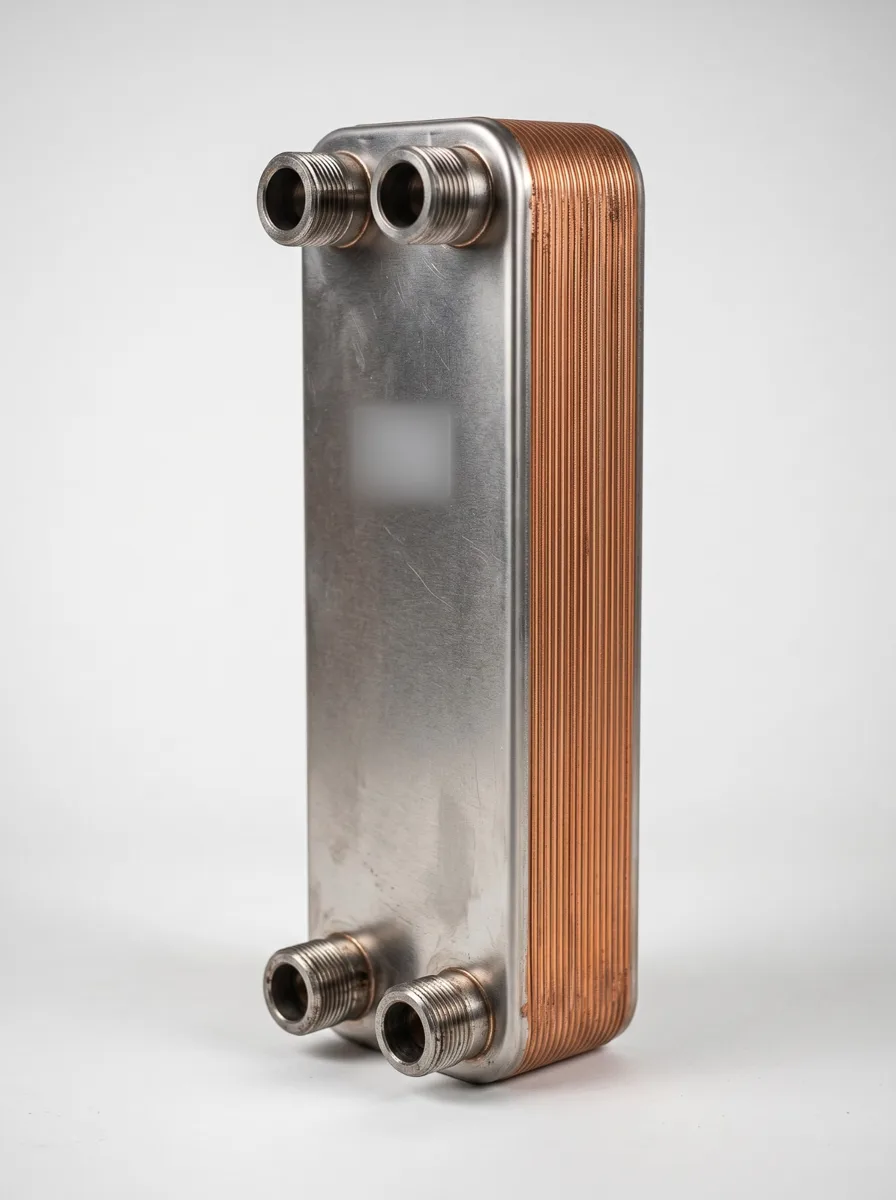
- Brazed: plates brazed into a sealed block without gaskets or frame. Very compact and low cost, for clean fluids in refrigeration and HVAC.
- Welded: plate pairs welded together for high pressure, high temperature or aggressive media where gaskets are unsuitable.
Why Choose Plates
- High turbulence keeps the plate surface cleaner and gives a close temperature approach, often under 2 °C.
- Footprint and weight are a fraction of an equivalent shell and tube exchanger.
- Capacity is raised by adding plates to a gasketed frame, with no new exchanger needed.
- Small liquid holdup gives quick response to load changes.
Maintenance
Plates and gaskets are the wear items. Worn gaskets are the commonest cause of leaks, and replacement gaskets and plates can be supplied for most makes. See our heat exchanger repair service for cleaning, re-gasketing and pressure testing.
Features
- High heat transfer in a compact, lightweight frame
- Close temperature approach for efficient heat recovery
- Gasketed units open fully for cleaning and inspection
- Capacity can be extended by adding plates
- Multiple plate patterns to balance heat transfer and pressure drop
- Replacement plates and gaskets for common makes
Applications
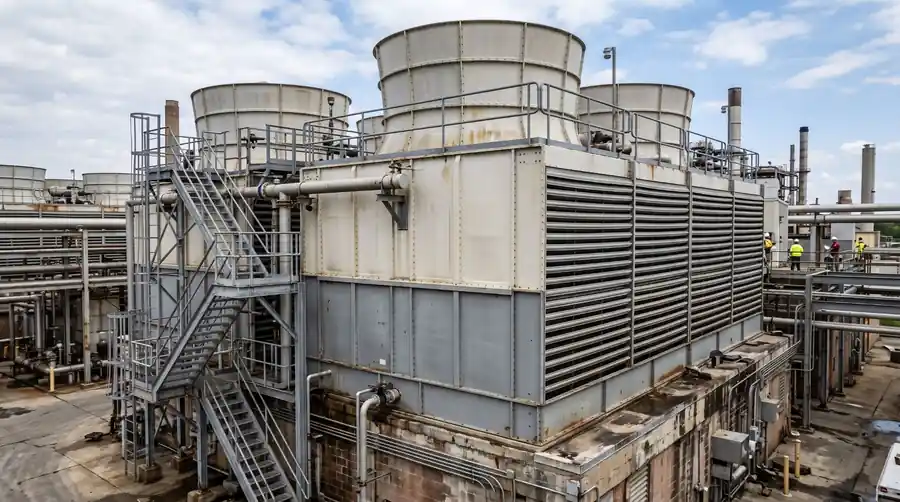
- Central cooling loops and closed-circuit cooling
- Chiller, HVAC and district cooling systems
- Food, beverage and dairy heating, cooling and pasteurizing
- Palm oil and edible oil heating
- Heat recovery between process streams
- Swimming pool and utility water heating
Materials
- Plates in stainless steel 304/316, titanium or Hastelloy
- Gaskets in NBR, EPDM or Viton, chosen for the fluid and temperature
- Carbon steel frame with protective coating
- Brazed units with stainless steel plates and copper or nickel braze
Plate Heat Exchanger: common questions
Where is Plate Heat Exchanger used?
Central cooling loops and closed-circuit cooling; Chiller, HVAC and district cooling systems; Food, beverage and dairy heating, cooling and pasteurizing; Palm oil and edible oil heating; Heat recovery between process streams; Swimming pool and utility water heating.
What materials are available for Plate Heat Exchanger?
Plates in stainless steel 304/316, titanium or Hastelloy; Gaskets in NBR, EPDM or Viton, chosen for the fluid and temperature; Carbon steel frame with protective coating; Brazed units with stainless steel plates and copper or nickel braze.
What do you need to quote Plate Heat Exchanger?
Hot and cold fluids, flow rates and inlet and outlet temperatures; Design pressure and allowable pressure drop; Preferred plate and gasket materials; Existing unit make and model, if replacing plates or gaskets; Quantity and delivery location.
Who supplies Plate Heat Exchanger in Indonesia?
PT Misuba Guna Indonesia supplies Plate Heat Exchanger to industrial plants across Indonesia from its base in Tangerang, Banten. Send your operating conditions and quantity to sales@misubaguna.com or WhatsApp +62 811-8715-671 for a quotation.
Need a price, sizing or a drawing for Plate Heat Exchanger?
Send your operating conditions and quantity. Our sales team will check the details and quote.